
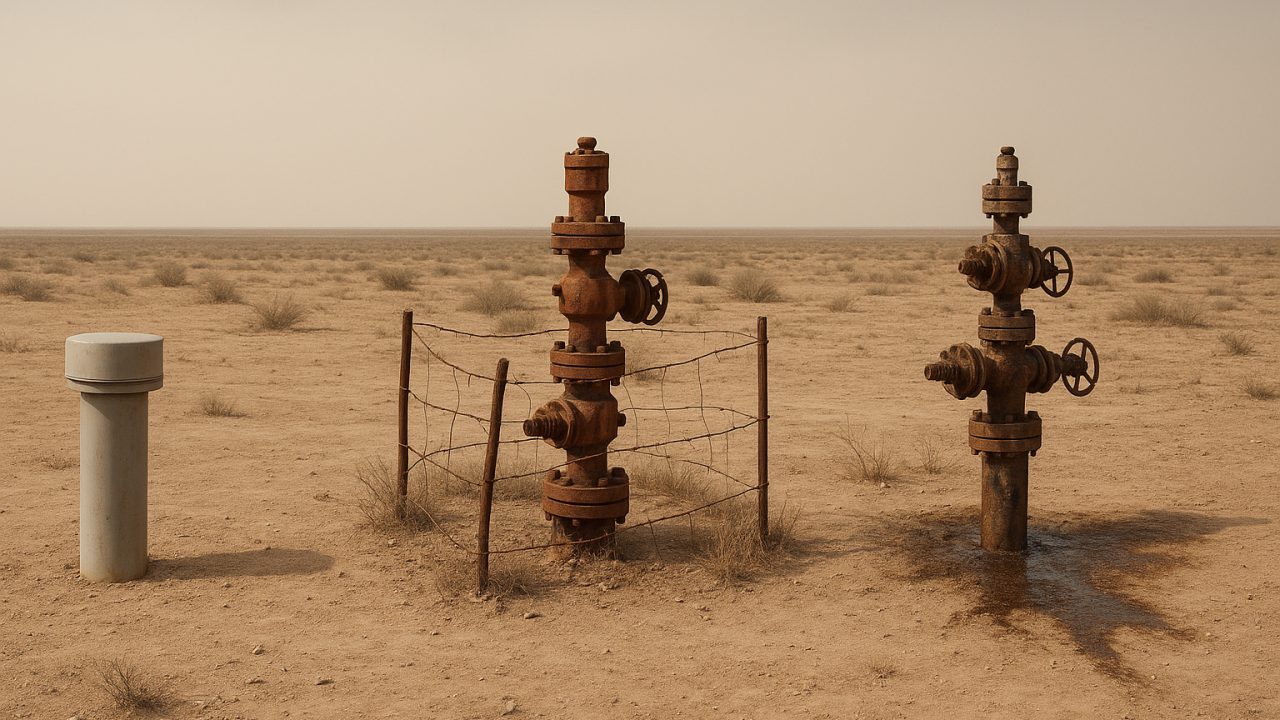
This is Article 2 in an ongoing series examining America's abandoned and orphaned well problem.
I spent the first half of my career navigating technical specifications and regulatory frameworks across multiple jurisdictions, from deepwater Gulf of Mexico operations under MMS oversight to international projects governed by varying national regimes. When you work in regulated industries, you learn quickly that definitions matter. A "spud date" means one thing to the Railroad Commission of Texas and something slightly different to the Bureau of Safety and Environmental Enforcement. Those distinctions determine permit requirements, reporting obligations, and ultimately legal liability.
The terminology around legacy wells works the same way, except the stakes are higher and the ambiguity is worse. Whether a non-producing well gets classified as "abandoned," "orphaned," "idle," or "zombie" determines who pays for remediation, which regulatory agency has jurisdiction, whether federal funding applies, and what legal recourse exists when contamination occurs. These categories aren't semantic quibbles. They define a multi-hundred-billion-dollar liability problem.
This article examines how states and federal agencies define these well categories, why the definitions diverge so dramatically, and what that fragmentation means for operators, regulators, and landowners trying to figure out who's responsible when a well that should be sealed starts leaking contaminated fluids into groundwater.
The problem with "abandoned"
The term "abandoned well" carries different meanings depending on who's using it. EPA's broad definition includes already-plugged wells, orphaned wells, and wells with responsible operators that remain inactive for a specified period. The Interstate Oil and Gas Compact Commission (IOGCC) uses more specific classifications, but even their framework leaves room for state-level interpretation.
In common usage, "abandoned" typically refers to wells that were properly plugged and sealed according to regulatory standards at the time of abandonment. The well has been permanently taken out of service, cement plugs installed at required intervals, surface equipment removed, and the site theoretically restored. The operating company fulfilled its regulatory obligations, filed the appropriate paperwork, and walked away with a clean regulatory record.
The problem is that "properly plugged according to standards at the time" doesn't mean the well stays sealed. Wells plugged in the 1950s and 1960s used cement formulations and installation procedures that we now understand were inadequate for long-term isolation. Casing materials corrode. Formation pressures shift. Cement bonds degrade. What was properly abandoned in 1965 may be leaking contaminated fluids in 2025, and the regulatory status of that well becomes a legal question with no clear answer.
When a supposedly abandoned well starts showing integrity problems, the immediate questions are whose responsibility it is, which agency has jurisdiction, and whether the original operator still carries any liability. The answers depend entirely on state regulatory frameworks, which vary dramatically.
Orphaned wells: the taxpayer's problem
The IOGCC defines an orphaned well as one that is inactive and does not have a viable operator responsible for plugging and cleanup. This is the clearest definition category because the triggering condition is unambiguous. No financially solvent entity exists that can be held liable for the well.
As of December 31, 2023, state regulators documented 141,959 orphaned wells across 29 reporting states, up from 49,743 in 1992. That's a 185% increase over three decades, and even this count substantially understates the problem. States estimate an additional 250,000 to 740,000 wells remain undocumented, many from the pre-permitting era when drilling occurred without formal regulatory oversight.
Pennsylvania exemplifies this documentation gap. The state reports 27,240 documented orphaned wells but estimates the actual count could range from 300,000 to 700,000 when pre-1985 wells are included. Pennsylvania's regulatory framework exempts all wells drilled before 1985 from bonding requirements, creating what amounts to a regulatory black hole for legacy wells. When an operator holding pre-1985 wells goes bankrupt, those wells become orphaned by default, with zero financial assurance in place to cover plugging costs.
The financial implications are stark. Average plugging costs range from $20,000 to $145,000 per well depending on depth, condition, and location. With documented orphan counts exceeding 140,000 wells and undocumented populations potentially reaching 740,000, states face aggregate liabilities measured in tens of billions of dollars against bonding pools that rarely exceed tens of millions.
Texas illustrates the bonding gap. The Railroad Commission of Texas allows operators to defer closure of unlimited idle wells by posting a blanket bond capped at $2 million. Analysis of the state's 15 largest operators shows actual plugging liabilities for their idle well inventories ranging from $67 million to $374 million per operator, which works out to bond coverage ratios of 1 to 3% for companies managing thousands of idle wells. When these operators become insolvent, their idle wells transition to orphan status with taxpayers covering 97 to 99% of the remediation costs.
Idle wells: the transition state
Idle wells represent the largest and most poorly defined category. These are wells with identifiable operators that haven't produced oil or gas for a specified period but haven't been permanently plugged. They sit in regulatory limbo, not abandoned and not yet orphaned, but increasingly likely to become the latter if their operators face financial distress.
State definitions of "idle" vary dramatically in both the triggering timeframe and the regulatory consequences:
Texas (Railroad Commission of Texas): A well becomes "inactive" after 12 consecutive months without production, disposal operations, or other approved activity. Operators must either plug the well, return it to production, or post additional bonding to maintain inactive status indefinitely. The $2 million blanket bond cap means operators can defer plugging thousands of wells for a fraction of actual closure costs.
California ( California Department of Conservation): Wells enter "long-term idle" status after eight years without production. The state requires detailed records, testing, and monitoring for long-term idle wells, with escalating fees designed to encourage either return to production or plugging. Despite these requirements, California maintains over 35,000 idle wells, the largest inventory of any state.
Oklahoma (Oklahoma Corporation Commission): Uses a 90-day threshold for wells to enter inactive status, requiring operators to file status updates. Bonding requirements remain minimal, with blanket bonds of $25,000 covering unlimited wells statewide.
Pennsylvania (Pennsylvania Department of Environmental Protection): Distinguishes between "inactive" (no production for 12 months) and "orphaned" (no viable operator). Pre-1985 wells have no bonding requirements regardless of idle duration. Post-1985 wells require only $2,500 per well in bonding against plugging costs averaging $33,000 to $70,000.
These definitional inconsistencies create significant challenges for operators managing assets across multiple states. A company's idle well management strategy in Texas won't align with California requirements. Multi-state operators must navigate divergent reporting obligations, variable bonding structures, and inconsistent enforcement protocols, all while the underlying wells continue aging and financial assurance coverage continues declining relative to actual remediation costs.
"Zombie wells": the terminology that stuck
"Zombie well" isn't a regulatory category. It's descriptive terminology that gained traction in Texas oil and gas discourse around 2021, referring to wells that were supposedly dead, properly plugged and abandoned, but have come back to life through plug failure, allowing fluids to migrate to surface or contaminate groundwater.
The Crane County incident that opened this series represents the archetypal zombie well scenario: a well plugged decades ago, removed from active regulatory oversight, assumed to be permanently sealed, and discovered only when catastrophic plug failure produced a visible surface discharge. The well wasn't in current databases. No operator monitoring occurred. The first indication of a problem was a 100-foot geyser erupting from the desert floor.
From a regulatory classification standpoint, zombie wells occupy an ambiguous space. They're technically abandoned because plugging paperwork was filed. They're not orphaned in the traditional sense if the original operator or successor entities remain solvent and identifiable. But they're clearly not properly sealed if fluids are migrating. Which agency has jurisdiction? Is this a Railroad Commission enforcement matter, or does the landowner's tort claim proceed in civil court? The Crane County litigation (Sarah Stogner and Burns Charest LLP) tested exactly these questions, with the court ultimately ruling that district courts, not the Railroad Commission, have jurisdiction over common-law and statutory claims related to leaking plugged wells.
The "zombie well" label serves a useful function by highlighting a category of legacy wells that fall between regulatory definitions. These wells are neither actively managed nor clearly assigned to any responsible party, yet they continue posing environmental and public health risks. The terminology forces acknowledgment of a problem that formal regulatory frameworks struggle to address. What happens when wells that were properly plugged decades ago fail under current subsurface conditions?
The federal framework: IIJA definitions and funding eligibility
The Infrastructure Investment and Jobs Act (IIJA) of 2021 allocated $4.7 billion for orphaned well remediation, distributed through both formula grants (allocated by well count and remediation costs) and performance grants (competitive applications for states demonstrating effective programs). The program's implementation required federal definitions that could apply across all state regulatory frameworks.
For IIJA funding purposes, DOI and EPA adopted definitions that generally align with IOGCC standards while allowing state-specific variations. The key eligibility criteria focus on operator viability. An orphaned well must lack a known, financially responsible operator capable of undertaking plugging and site restoration. This definition deliberately defers to state determinations of operator insolvency and liability.
IIJA eligibility requirements also create potential conflicts with state definitions. A well classified as idle under state regulations, meaning it has an identified operator, wouldn't qualify for federal orphaned well funding even if the operator lacks the financial capacity to plug it. States must first pursue operator liability through their enforcement processes before designating wells as orphaned and eligible for federal funds.
This creates perverse incentives. States with weaker operator liability frameworks, those that allow indefinite deferral through minimal bonding, effectively shift more wells into the federal funding pipeline, because operators can maintain idle status until insolvency, at which point wells become orphaned and federally fundable. States with stricter idle well management requirements, those that force timely plugging decisions, may paradoxically qualify for less federal funding because their regulatory pressure prevents wells from becoming technically orphaned.
The IIJA definitions also don't address zombie wells. A well that was plugged decades ago but is now leaking doesn't meet the orphaned well criteria if the original operator or successor entities remain identifiable and solvent. Federal funding doesn't cover re-plugging previously abandoned wells, even when those wells pose equivalent environmental risks. This gap leaves states and landowners without federal resources for exactly the category of wells most likely to have been plugged with inadequate historical standards.
Where I land on definitional reform
The state-by-state variation in well classifications isn't an accident. It reflects legitimate differences in geological conditions, historical drilling practices, and regulatory capacity. Wyoming's approach to idle wells in the Powder River Basin reasonably differs from Louisiana's approach in mature onshore fields. Perfect uniformity isn't the goal.
But the current level of definitional fragmentation creates significant practical problems.
Operator compliance complexity: Companies working across multiple states must maintain separate regulatory calendars, bonding structures, and reporting systems for essentially identical wells that happen to sit on opposite sides of state lines. This complexity doesn't improve environmental outcomes. It increases administrative costs while creating opportunities for wells to fall through definitional gaps during ownership transfers.
Funding allocation inefficiency: Federal programs struggle to distribute resources equitably when state well counts reflect different definitions. Pennsylvania's documented orphan count of 27,240 dramatically understates the problem relative to Texas or California, not because Pennsylvania has fewer problematic wells, but because Pennsylvania's definitions exclude hundreds of thousands of pre-1985 wells from the count.
Liability ambiguity during litigation: When contamination occurs, determining responsible parties requires first establishing which well category applies, which regulatory framework governs, and whether the matter belongs with administrative agencies or civil courts. The Crane County jurisdiction fight consumed two years of litigation just to establish which forum could hear the case, during which time contaminated water continued affecting the property.
Inadequate capture of plug failures: No state regulatory framework systematically tracks abandoned wells that later show integrity problems. Once a well is plugged and the paperwork filed, it exits active regulatory oversight. The "zombie well" category exists in descriptive terminology but not in formal definitions, meaning states lack mechanisms to count, prioritize, or fund remediation of failed plugs.
The most practical reforms don't require perfect uniformity. They call for clearer federal standards for IIJA-funded programs while preserving state flexibility for active operator enforcement. Key elements might include:
-
Standard idle period definitions for federal funding: IIJA eligibility could establish baseline definitions. For example, wells inactive for 2+ years qualify as idle for funding purposes regardless of state classification.
-
Failed plug remediation pathway: Federal funding currently covers orphaned wells that were never plugged. It should also cover re-plugging wells where historical plugs have demonstrably failed, regardless of whether original operators remain solvent. These wells pose equivalent risks.
-
Bonding floor tied to federal funding access: States receiving IIJA formula grants could face minimum bonding requirements, not uniform nationwide rates, but floors that prevent complete disconnects between bonding and plugging costs. If a state caps blanket bonds at levels covering 1 to 2% of actual liabilities, that state's formula grant could be reduced proportionally.
-
Successor liability clarity: Federal guidance could establish clearer frameworks for when liability transfers with asset sales, particularly in bankruptcy proceedings. Currently, asset purchasers can acquire producing wells while disclaiming responsibility for associated idle wells, leaving those wells to become orphaned at public expense.
These reforms wouldn't eliminate state-level variations, but they would reduce the most problematic definitional gaps while creating better incentives for operator accountability before wells reach orphaned status.
Practical implications: who pays, who enforces
For environmental consultants, O&G operators, regulatory professionals, and attorneys, the definitional ambiguities translate into concrete questions.
When conducting environmental due diligence on property acquisitions: Are nearby wells classified as abandoned, idle, or orphaned? Who holds current operating authority? What bonding is in place? If wells exist on the property itself, which state regulatory framework applies, and what are the timelines for forced plugging or bonding increases? These questions have materially different answers in Texas, Pennsylvania, and California, affecting transaction valuations and liability exposure.
For operators managing idle well inventories: Which state definitions trigger enhanced bonding or mandatory plugging decisions? How do those definitions interact with federal bankruptcy proceedings if the company restructures? If assets are sold, do idle well obligations transfer with producing wells or remain with the seller? The answers determine whether idle wells represent manageable deferred liabilities or immediate financial threats.
For landowners discovering legacy wells: If testing reveals contamination from an old well, is that well legally abandoned, meaning the operator fulfilled obligations at the time? Is it orphaned, meaning no viable party to sue? Or is it a zombie, a descriptive term with unclear legal status? These classifications determine which agencies have jurisdiction, what enforcement mechanisms exist, and whether remediation costs fall on the landowner, state agency, or identifiable operator.
For regulatory agencies allocating limited budgets: How should scarce plugging funds prioritize across orphaned wells, high-risk idle wells, and failed plugs? Federal IIJA funding applies only to orphaned wells, meaning states must fund idle well enforcement and zombie well re-plugging from state sources. The definitional boundaries determine resource allocation across well categories with equivalent environmental risks but different legal classifications.
The terminology that shapes these classifications isn't neutral. It determines liability, jurisdiction, funding eligibility, and ultimately whether problematic wells get remediated or remain long-term environmental hazards. Understanding these definitions and their state-by-state variations is essential for anyone working with legacy well liability.
Over the next several months, I'll be examining how these definitional frameworks operate in practice: which states have effective enforcement mechanisms, how IIJA funding has changed regulatory priorities, where the bonding gaps are largest, and what data infrastructure improvements could help identify high-risk wells before they transition to orphaned status.
Next in this series: the scale of the problem. How many wells we're actually talking about, where they're located, how those counts were derived, and why different sources produce dramatically different estimates.
Your Perspective
For professionals working across state regulatory frameworks, these definitional inconsistencies create daily challenges.
For multi-state operators: How do you manage compliance with divergent idle well definitions? Have you encountered situations where the same well type receives different classification in neighboring states? What's the cost of maintaining separate regulatory compliance systems?
For environmental attorneys: How do definitional ambiguities affect litigation strategy? When litigating contamination from legacy wells, how much time is spent just establishing which regulatory framework governs? Have you seen cases where well classification disputes consumed more resources than the underlying environmental claims?
For state regulatory staff: How does your state's definition of "orphaned" interact with federal IIJA funding criteria? Are there well categories that don't fit cleanly into existing definitions? How do you handle abandoned wells that show integrity problems decades after plugging?
For environmental consultants: When conducting Phase I or Phase II assessments, how do you determine the regulatory status of nearby legacy wells? What data sources do you use, and how reliable are they? Have you encountered situations where well classification affected liability allocation in transactions?
The conversation around abandoned wells tends to focus on funding levels and plugging technologies. The definitional infrastructure, the legal frameworks that determine which wells qualify for which remediation programs, receives less attention but ultimately shapes whether remediation occurs at all.
Sources (key links)
-
IOGCC 2024 Supplemental Report (Orphan well counts, state data): National Academies workshop proceedings on orphaned and abandoned well plugging standards
-
EPA abandoned wells definition (Broad framework): EPA workshop discussion on orphaned well definitions
-
Texas Railroad Commission inactive well requirements: https://www.rrc.texas.gov/oil-gas/compliance-enforcement/hb2259hb3134-inactive-well-requirements/
-
Carbon Tracker "Billion Dollar Orphans" report (Bonding gap analysis): https://carbontracker.org/reports/billion-dollar-orphans/
-
IIJA orphaned well program overview: https://www.doi.gov/orphanedwells
-
BLM Instruction Memorandum 2021-021 (Federal orphan well identification and prioritization): https://www.blm.gov/policy/im-2021-021
-
Pennsylvania DEP Oil and Gas Program bonding information: https://www.dep.pa.gov/Business/Energy/OilandGasPrograms/Pages/default.aspx
-
California DOGGR idle well management program: https://www.conservation.ca.gov/calgem/Pages/WellManagement.aspx